How Often Should Your Pool Pump Run Daily
A pool can look clean and still have poor circulation. That is why pump run time matters. The pump is what moves water through the filter, carries sanitizer through the pool, and helps keep leaves, pollen, sunscreen, and algae from taking over.
For most residential pools in the U.S., a good starting point is 8 to 12 hours per day during swim season. In cooler months, many pools can get by with 4 to 6 hours per day. If you have a variable-speed pump, it may run longer at a lower speed, sometimes 12 to 24 hours, while using less energy than a single-speed pump running hard for fewer hours.
The best schedule is not one-size-fits-all. It comes from your pool size, pump flow rate, filter condition, weather, and how often the pool gets used.

The simple daily rule for pool pump run time
A pool pump should usually run long enough to circulate the full volume of water at least once per day. This is often called one turnover.
That does not mean every drop of water passes through the filter exactly once. Pool water mixes as it moves. Some water may filter more than once, while some areas may circulate more slowly. Still, one turnover is a useful way to set a baseline.
A common daily target looks like this:
Pool situation | Typical daily pump run time |
Average residential pool in summer | 8 to 12 hours |
Light use in mild weather | 6 to 8 hours |
Heavy use, hot weather, or lots of debris | 10 to 14 hours |
Cooler off-season months | 4 to 6 hours |
Variable-speed pump at low speed | 12 to 24 hours |
These are starting points, not permanent rules. The real test is water clarity, chemical balance, surface skimming, and whether algae starts to appear.
If the water stays clear, chlorine holds steady, and debris gets pulled into the skimmer, the schedule is likely working. If the pool turns cloudy or develops green spots, the pump may need more time, better flow, or filter maintenance.
How to calculate your pool pump run time
The most accurate way to set a schedule is to compare your pool volume with your pump’s flow rate.
Use this basic formula:
Pool gallons ÷ pump gallons per hour = hours needed for one turnover
For example, if a pool holds 20,000 gallons and the pump moves about 2,500 gallons per hour, the math looks like this:
20,000 ÷ 2,500 = 8 hours
That pool needs about 8 hours of pump run time to complete one turnover.
How to estimate pool volume
If you do not know your pool volume, you can estimate it with basic measurements.
For a rectangular pool:
Length × width × average depth × 7.5 = gallons
For a round pool:
Diameter × diameter × average depth × 5.9 = gallons
For an oval pool:
Length × width × average depth × 5.9 = gallons
Average depth is found by adding the shallow-end depth and deep-end depth, then dividing by two.
For example:
Shallow end 3 feet
Deep end 7 feet
Average depth 5 feet
A 16-by-32-foot rectangular pool with a 5-foot average depth would be:
16 × 32 × 5 × 7.5 = 19,200 gallons
How to find your pump flow rate
Pump flow rate is usually listed in gallons per minute, or GPM. To convert it to gallons per hour, multiply by 60.
A pump moving 40 GPM moves about:
40 × 60 = 2,400 gallons per hour
Flow rate can change based on plumbing size, filter pressure, pipe length, pump speed, and equipment condition. If the filter is dirty or the skimmer basket is packed with leaves, actual water flow drops.
That means a schedule that worked in May may not work as well in August if the filter is clogged or the pool gets heavier use.
Different pumps need different schedules
Not all pool pumps should run the same way. The type of pump matters a lot.
Single-speed pumps usually run fewer hours
A single-speed pump runs at one fixed speed. It is either on or off. These pumps can move plenty of water, but they often use more electricity because they run at full power the whole time.
Many single-speed pumps run 6 to 12 hours per day, depending on pool size and weather. For energy savings, homeowners often run them during off-peak electricity hours when available.
The downside is that shorter high-speed run times may not skim the surface as evenly throughout the day. Leaves and insects can sit on the water longer between cycles.
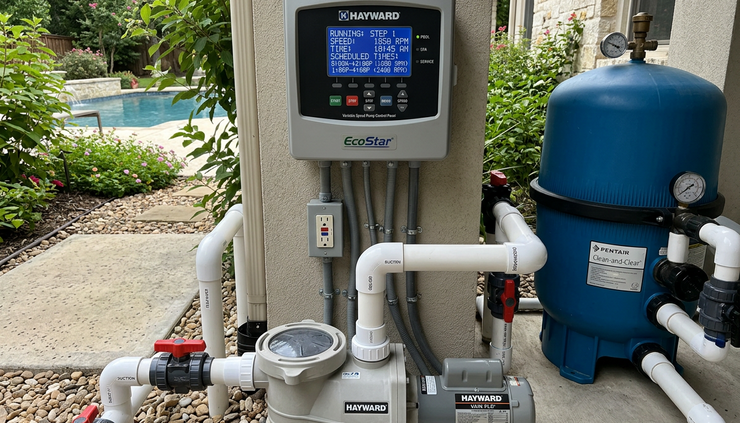
Variable-speed pumps can run longer at low speed
A variable-speed pump lets you adjust the speed. This changes the schedule completely.
Instead of running at high speed for 8 hours, a variable-speed pump may run at a low speed for much longer. Low speed moves less water per hour, but it uses much less energy than high speed.
A common setup might include:
Low speed for daily filtration
Medium speed for better skimming
High speed for vacuuming, heating, spa jets, or water features
Many pool owners run variable-speed pumps most of the day at low speed, then schedule a shorter higher-speed cycle to improve skimming. This can keep water moving without the energy draw of full-speed operation.
Weather and pool use change the answer
The question, how often should your pool pump run daily, has a seasonal answer because pool water changes with heat, sunlight, rain, and use.
Hot weather usually means more pump time
Warm water uses sanitizer faster and gives algae better conditions to grow. During a heat wave, extending pump time can help keep chlorine mixed and filtration steady.
If the pool gets direct sun for most of the day, the water may need more circulation than a shaded pool of the same size.
Heavy swimming calls for longer circulation
People bring in sunscreen, body oils, sweat, dirt, and small debris. A pool used by several swimmers every day needs more filtering than one used only on weekends.
After a pool party or a long swim day, run the pump longer than usual. It helps the filter catch fine debris and spreads sanitizer through the water.
Rain and storms can change water balance
Heavy rain can wash dirt, pollen, mulch, and lawn debris into the pool. It can also dilute sanitizer and affect water chemistry.
After a storm, skim the surface, empty the baskets, check the water level, and run the pump long enough to restore clarity. If the pool looks cloudy, filtration and water testing matter more than sticking to the regular timer.
Off-season pools need less movement
In cooler months, algae grows more slowly and sanitizer tends to last longer. If the pool stays open year-round, many systems can run fewer hours per day in winter.
A pool with a safety cover may need even less daily filtration, but it should not sit completely stagnant for long periods unless it has been properly winterized.
The best time of day to run a pool pump
Many pool owners run the pump during the day because that is when sunlight breaks down chlorine and swimmers are most active. Daytime circulation helps distribute sanitizer when the pool needs it most.
That said, electricity rates can make nighttime run times appealing. If your utility charges less during off-peak hours, running part of the schedule overnight can save money.
A split schedule often works well:
Run a few hours in the morning
Run again in the afternoon or evening
Add more time after heavy use or storms
Splitting the run time keeps water moving more often. It can also improve skimming compared with running one long block while the pool sits still the rest of the day.
If you use a saltwater chlorine generator, follow the manufacturer’s guidance for pump run time. The generator only makes chlorine when water flows through it, so the pump schedule affects chlorine production.
Signs your pump is not running long enough
The pool usually tells you when circulation is too low. Watch for these signs:
Cloudy water that does not clear after normal chemical treatment
Green dust or algae on walls, steps, or corners
Weak skimmer action
Debris floating for long periods
Chlorine levels that drop faster than expected
Dead spots where water does not seem to move
A filter pressure reading that changes quickly or stays too low
Do not solve every water problem by adding hours. A dirty filter, clogged basket, air leak, blocked skimmer weir, weak pump, or poor water balance can all cause similar symptoms.
If the pump runs long enough but the water still looks dull, check these basics:
Empty the skimmer and pump baskets
Backwash or clean the filter when needed
Brush walls, steps, and corners
Test chlorine, pH, alkalinity, and stabilizer
Make sure return jets aim water in a circular pattern
Confirm the water level sits around the middle of the skimmer opening
Good circulation needs both run time and proper water flow.
How long to run the pump after adding chemicals
Run the pump after adding pool chemicals so they mix through the water. For many routine chemical additions, running the pump for several hours is enough. Always follow the product label because some treatments need specific circulation times.
Common examples include:
After adding this | Typical pump guidance |
Liquid chlorine | Several hours of circulation |
Muriatic acid | At least a few hours, with careful handling |
Alkalinity increaser | Several hours of circulation |
Calcium hardness increaser | Several hours of circulation |
Shock treatment | Often overnight or until water clears |
Never pour different chemicals together or add them at the same time in the same spot. Add chemicals separately, keep the pump running, and give each product time to disperse.
If you shock the pool, leave the pump running long enough to circulate and filter the water. Test before swimming again and follow the product directions.

How to reduce pump time without hurting water quality
The goal is not to run the pump as little as possible. The goal is to run it long enough for clean water without wasting power.
Start with the calculated turnover time, then adjust in small steps. If the pool looks great at 10 hours, try 9 hours for a week. If the water stays clear and balanced, try another small reduction. If clarity drops, go back up.
A few habits can help reduce unnecessary pump time:
Keep baskets clean Clogged baskets slow water flow and make the pump work harder.
Clean the filter on schedule A dirty filter can reduce circulation even when the pump runs all day.
Brush the pool weekly Brushing moves fine debris into the water so the filter can catch it.
Aim return jets correctly A gentle circular flow helps move water from the surface and lower areas.
Use a pool cover when practical A cover can reduce debris and slow chlorine loss.
Keep chemistry balanced Poor water balance can cause cloudiness even with long pump run times.
For variable-speed pumps, focus on speed settings as much as hours. A very low speed may save energy, but it still needs enough flow for skimming, heating, chlorination, and any attached equipment.
A practical daily schedule for most pools
If you want a simple place to start, use this approach:
Pool condition | Starting schedule |
Spring opening | 10 to 12 hours per day until clear |
Normal summer use | 8 to 12 hours per day |
Heavy use or very hot weather | 10 to 14 hours per day |
Light use in mild weather | 6 to 8 hours per day |
Winter operation in mild climates | 4 to 6 hours per day |
For a single-speed pump, one or two blocks of run time usually makes sense. For a variable-speed pump, a longer low-speed schedule with short higher-speed periods may work better.
Here is a simple example for a summer pool with a variable-speed pump:
Morning Run at medium speed for skimming.
Midday Run at low speed for filtration and circulation.
Evening Run at medium speed again after swimming.
This schedule keeps the pool moving during the times when debris, sunlight, and swimmers affect the water most.
The takeaway for daily pool pump run time
Most pools need 8 to 12 hours of pump run time per day in warm weather, but the best number comes from your pool’s gallons and your pump’s flow rate. Start by aiming for one full turnover per day, then adjust based on water clarity, chemical levels, weather, and use.
If the water is clear, the surface skims well, and the chemistry holds steady, your schedule is doing its job. If the pool turns cloudy, collects debris, or shows algae, increase circulation and check for flow problems before blaming the timer.


Comments